
Resources
The reference shelf
The pages we keep coming back to: the words, the seasons, the books, and the kitchen habits that make the harvest worthwhile.
Tools & supplies
Choose supplies by growing method, with practical buying links and advice on what can wait.
Nine words worth knowing
- Mycelium
- The thread-like body of the fungus, living inside its food source. The part you actually grow.
- Substrate
- Whatever the mycelium eats — straw, sawdust, logs, coffee grounds.
- Spawn
- Substrate fully colonized by mycelium, used to "seed" a new grow. The mushroom equivalent of starter dough.
- Fruiting body
- The mushroom itself — the reproductive structure the mycelium builds.
- Inoculation
- Introducing mushroom spawn into a prepared growing material such as a log, straw, or another substrate.
- Colonization
- The quiet weeks while mycelium spreads through the substrate before any mushrooms appear.
- Pinning
- The moment tiny baby mushrooms (pins) first form — the start of a flush.
- Flush
- A wave of mushrooms that develops and becomes ready to harvest around the same time. Some substrates can produce multiple flushes.
- Contamination
- Unwanted mold or bacteria competing with your mycelium. Usually green, always disappointing.
The grower’s year
Mushroom work changes with the seasons, even when part of the operation is indoors. This is a broad calendar for growers in temperate climates, not a fixed schedule. Species, strains, weather, and production systems can all shift the timing.
| Season | Outdoors | Indoors | Kitchen |
|---|---|---|---|
| Spring | Watch overwintered logs for natural fruiting and finish dormant-season log inoculation before sustained warm weather. Fresh logs are generally best inoculated soon after cutting. | Cool-weather oyster strains may still perform well. Begin adjusting ventilation and temperature plans as outdoor conditions warm. | Cool fresh harvests promptly and cook or preserve any surplus. |
| Summer | Keep log yards shaded and protect logs from excessive drying. Identify candidate trees for fall and winter cutting while their leaves make identification easier. | Choose warm-tolerant species or strains unless the growing space is actively cooled. Pay close attention to heat, humidity, and fresh-air exchange. | Refrigerate harvests promptly and preserve anything that will not be used while fresh. |
| Autumn | Natural fruiting often returns with cooler, wetter weather. Depending on local conditions, growers may begin cutting and inoculating fresh hardwood for the next production cycle. Fall-inoculated logs can overwinter before fruiting later. | Cooler conditions can make bucket, bag, and other small-scale indoor grows easier to manage. | Dry, freeze, pickle, or otherwise preserve surplus harvests. |
| Winter | Cut suitable dormant hardwood and inoculate it promptly when practical. Protect newly inoculated logs from excessive sun, wind, and drying as colonization begins. | Indoor growing can continue when temperature, humidity, and fresh-air exchange are controlled. Winter conditions may reduce the need for cooling. | Use preserved mushrooms and keep notes about what should be prepared differently during the next harvest season. |
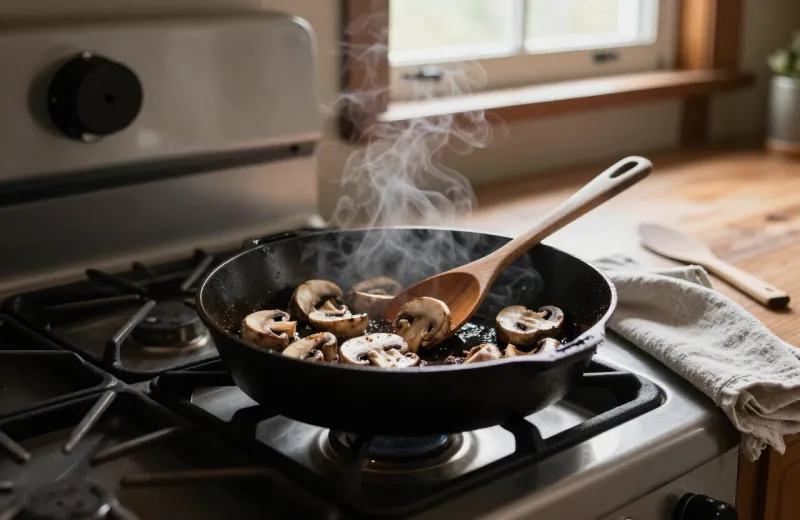
Kitchen notes
Use breathable storage
Fresh mushrooms generally keep better in a paper bag or another breathable container in the refrigerator. Sealed plastic can trap moisture and encourage sliminess.
Let excess moisture cook off
Mushrooms often release water when heated. Allowing that moisture to evaporate before adding finishing fats or sauces can improve browning and texture.
Give them room to brown
An overcrowded pan traps steam. Cooking in batches can help mushrooms develop better color and flavor.
Save useful trimmings
Clean stems and firm trimmings can add mushroom flavor to stocks, broths, gravies, and sauces, although very tough or dirty pieces should be discarded.
Books worth exploring
These established books approach fungi from different angles, including cultivation, fungal biology, and ecological applications. Together they offer a useful mix of practical instruction, technical reference, and broader context.
Growing Gourmet and Medicinal Mushrooms
Paul Stamets
A detailed and technical cultivation reference covering many species, substrates, and production methods.
View the bookOrganic Mushroom Farming and Mycoremediation
Tradd Cotter
A practical exploration of indoor and outdoor cultivation, low-tech methods, laboratory work, and ecological applications.
View the bookEntangled Life
Merlin Sheldrake
An accessible exploration of fungal biology and ecology rather than a step-by-step cultivation manual.
View the bookThe Mushroom Cultivator
Paul Stamets and J. S. Chilton
A technical cultivation book with useful foundational explanations, although some equipment and practices reflect its original 1983 publication date.
View book detailsMycelium Running
Paul Stamets
A broad look at mushroom cultivation and the potential ecological uses of fungi, written from an advocacy-oriented perspective.
View the book
These are ordinary external links. We don’t currently earn a commission from them.
Useful places to keep learning
A few dependable places for spawn, cultivation instructions, and deeper reference material. Supplier instructions for the exact species or strain should take priority over any general guide.
Field & Forest Products
A long-established source for gourmet mushroom spawn, tools, and species-specific growing instructions. We’re familiar with their spawn and do not plan to produce spawn ourselves.
Cornell Small Farms
Free, research-based guides covering the mushroom life cycle, indoor and outdoor systems, fruiting, harvest, and small-farm production.
Opinel mushroom knife
A curved harvesting knife with an integrated brush. We’ve used Opinel and include it as a practical example, not because a special knife is required.
We link to resources we believe are useful. We don’t currently receive compensation from these companies. If that changes, affiliate relationships will be clearly disclosed.